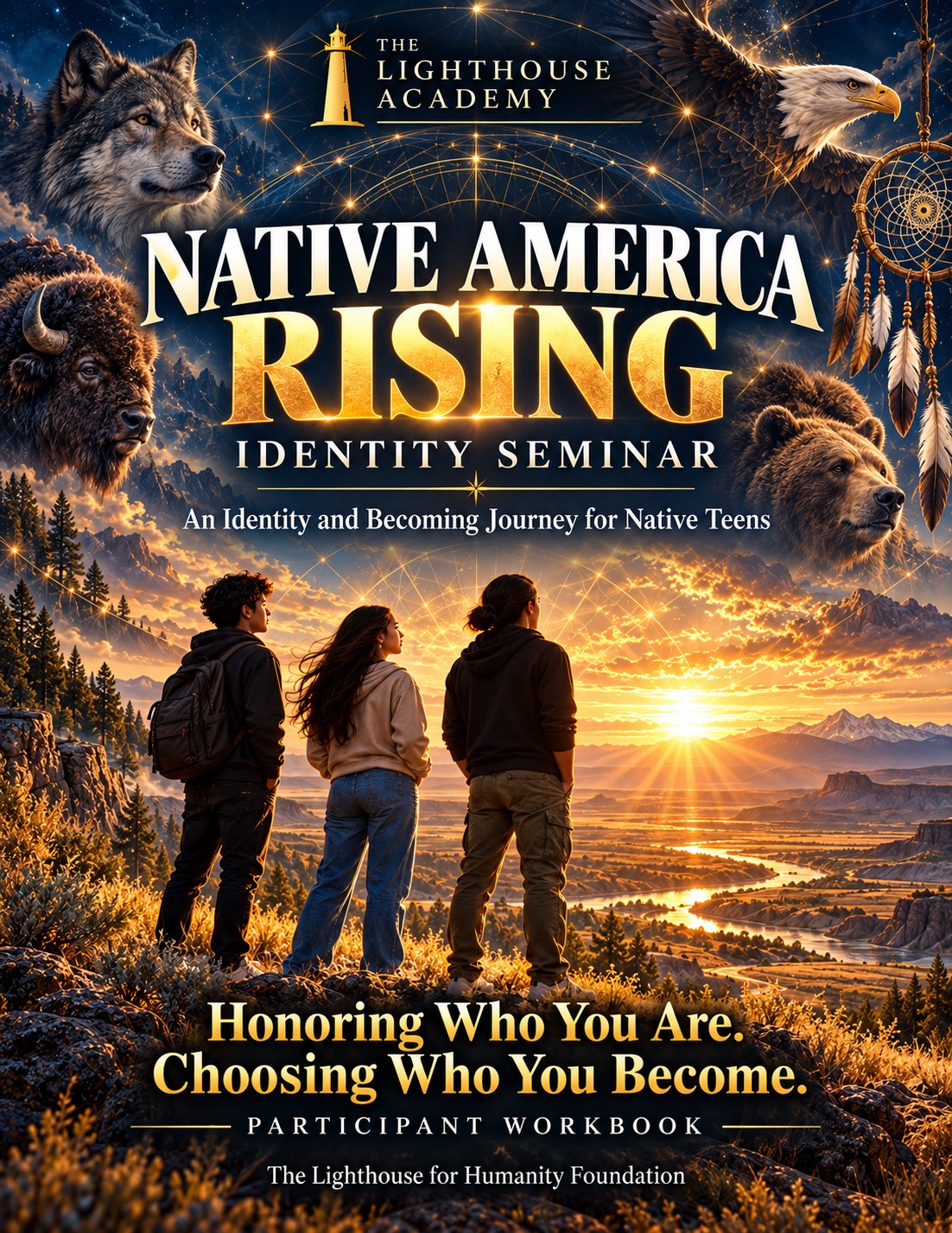
The Lighthouse Academy
Native America Rising
Honoring Who You Are.
Choosing Who You Become.
An identity seminar for Native teens living on reservations.
Every young person brings strengths, questions, and a future worth exploring. Begin a journey of belonging, possibility, and purposeful action, with your community helping shape the experience.
A place to begin
Your worth is already here.
Your next chapter is unfolding.
Native America Rising invites young people to recognize strengths they may overlook, examine limiting labels, strengthen meaningful connections, and imagine possibilities for their lives.
Identity: Who Am I Becoming?
Identity begins with how we understand who we are, where we belong, and who we can become. Participants explore that understanding while honoring the relationships, responsibilities, and values that sustain them.
Growth can include carrying forward what matters, asking new questions, and practicing qualities they choose.
Collective Intelligence™
Bringing different perspectives into thoughtful conversation can deepen understanding. Through Professor Quinn, the curriculum welcomes young people’s questions, mentors’ experience, research, and wisdom shared across generations.
Participants are invited to question the mentor, too. Communities guide how their own knowledge enters the conversation.
Listen. Question. Practice.
Step Inside the Experience
Each chapter connects a story with conversation, private reflection, and a supported next step.
Landon’s Journey
Listen to The Creation Code: Teen Edition audiobook or read along as Landon explores possibilities with Professor Quinn. Notice what he discovers, what remains unresolved, and what you would ask.
Quinn’s Corner
Explore Native teen stories about worth, belonging, relationships, culture, and opportunity. Consider what each young person needs us to understand before offering advice.
Contemplation to Application
Write, draw, or reflect quietly. Identify a strength, a meaningful connection, or a possibility to explore. Choose a manageable action, consider the support needed, and return to what you learn.
The Transformation Loop
A repeating practice for learning through experience.
- See It Notice what is happening in your life.
- Say It Express what you feel and need, in words or private reflection.
- Feel It Make room to understand what you are feeling inside.
- Choose Again Use what you have learned to consider a next step.
Personal sharing is optional. Participants may keep reflections private, consider a story character, leave a question unanswered, or ask for support.
Experience Quinn’s Corner
Someone Else’s Question.
A Discovery of Your Own.
Sometimes another person’s question helps us recognize something we have struggled to put into words.
In Quinn’s Corner, a young person’s story becomes an emotional proxy: someone whose experience participants can consider without having to disclose their own. They follow Landon and Professor Quinn as the conversation unfolds, then explore what they notice, question, or discover.
This is an invitation to learn vicariously: to gain perspective through another person’s experience and consider what that understanding might mean in our own lives.
Chapter One • Worth, Belonging, and the Right to Grow
Do I Matter Before I Achieve Something?
Alex, age 15
“My cousin gets good grades and wins at everything. People are always talking about what he’ll do someday. I’m happy for him, but I’m pretty ordinary. I help my grandmother, watch my little brother, and get through school. If I’m not doing anything impressive, what makes me worth anything?”
Before the mentoring conversation
Pause Here for a Moment
What does Alex most need us to understand? What question would you ask before offering advice?
You are exploring Alex’s story. You do not need to share a personal experience or solve his situation.
Follow the conversation • Workbook pages 29–30
Landon and Professor Quinn
Landon
Professor, Alex is describing things that matter, but he seems to have left them out when he measured himself.
Professor Quinn
Perhaps he has learned to recognize only the things that receive applause.
Alex, may I ask you something?
When you help your grandmother, what becomes easier for her?
When you look after your brother, what does he receive from you?
Those actions may reveal patience, care, or dependability. They deserve to be noticed.
But let us take the question further. Suppose tomorrow you needed help yourself. Suppose you could not be helpful, earn a good grade, or accomplish anything impressive.
Would your dignity disappear?
Landon
No. He would still deserve care and respect.
Professor Quinn
Exactly. Achievement can show what you have learned. It does not decide whether you deserve to matter.
Comparison often leaves out much of a person’s life. You see your cousin’s recognition. You may not see his doubts. You know your own doubts, so you compare them with his accomplishments.
Alex, what might you discover if you became curious about your strengths instead?
From observation to understanding
What Did the Conversation Help You See?
- What does Alex already contribute that he has overlooked?
- Which question from Quinn helped you think differently? How?
- Why did Quinn ask whether Alex’s dignity would disappear if he could not achieve or help anyone?
- What would you say to a friend who thought they had to earn their worth?
You may question Quinn’s reasoning, too. What would you want him to explain further?
Contemplation to Application
Carry One Discovery Forward
Think about Alex, another story character, or yourself. Write, draw, or reflect quietly:
- A strength that deserves to be noticed is…
- One way to express care or respect is…
- A small next step could be…
- Someone who could offer support is…
After trying the step, return to the learning: What happened? What did you notice? What would you keep, change, or ask next?
Sharing is optional. The reflection questions and brief application above combine workbook questions with prompts prepared for this webpage.
How the Learning Unfolds
Alex provides a human situation to consider. Landon models noticing and asking. Quinn opens the question further. Participants examine the conversation and form their own understanding.
That understanding becomes something they can test through a thoughtful action, a conversation, or a request for support.
Explore the curriculum
Fifteen Chapters.
Forty-Five Issues to Explore.
Open a theme to see its issues, learning purpose, and a question to consider.
These themes follow the workbook’s learning map. Individual reading titles may differ. The curriculum does not assume every participant has experienced every issue. Communities can choose a manageable pathway and return to other material over time.
01 The Door You Can Open Worth, belonging, and the right to grow
Three issues to explore
- Self-worth and confidence
- Loneliness and exclusion
- Having one’s Native identity questioned
Learning purpose
Recognize personal worth, identify sources of belonging, and begin describing possibilities for yourself.
What strengths might you be overlooking?
02 The Stories I Carry Understanding the messages and inheritance that shape us
Three issues to explore
- Racism and stereotyping
- Intergenerational trauma
- Inaccurate or absent Native history in school
Learning purpose
Distinguish harmful labels from identity, honor sustaining inheritance, and examine whose stories shape expectations.
Which messages do you want to carry forward?
03 Growing Without Losing Myself Making room for needs, responsibilities, and growth
Three issues to explore
- Stress and emotional regulation
- Caregiving responsibilities
- Sleep, movement, recreation, and recovery
Learning purpose
Recognize needs, practice responding to stress, and balance responsibilities with personal development.
What support would make room for your own growth?
04 Connection and Boundaries Building respectful relationships
Three issues to explore
- Bullying and lateral violence
- Dating relationships, consent, and coercion
- Family conflict and instability
Learning purpose
Practice respect, recognize harmful relationship patterns, and identify boundaries and trusted support.
What does respect look like in everyday actions?
05 What Sustains Me Language, relationships, and sources of meaning
Three issues to explore
- Limited access to language and cultural education
- Disconnection from elders and mentors
- Access to spiritual and ceremonial life
Learning purpose
Explore sources of meaning and connection, with cultural learning guided by the participating community.
Who could help you explore a connection that matters to you?
06 Finding My Way Through Hard Times Recognizing distress and connecting with care
Three issues to explore
- Grief and repeated loss
- Depression, anxiety, and trauma-related distress
- Suicide and self-harm prevention
Learning purpose
Recognize distress, practice supportive responses, and know when and how to connect with qualified help.
Who could help you take the first step toward support?
07 See It, Name It, Choose Understanding influences and practicing safer choices
Three issues to explore
- Substance misuse and pressure to use
- Online harassment and exploitation
- Social media comparison and identity pressure
Learning purpose
Notice influences, examine consequences, and rehearse safer choices and ways to seek support.
What helps you pause before responding to pressure?
08 A Future I Can Picture Exploring possibilities and connection to home
Three issues to explore
- Pressure about staying on or leaving the reservation
- Limited career exposure and mentorship
- Uncertainty about adulthood and the future
Learning purpose
Imagine several meaningful futures and explore how opportunity and connection to home can coexist.
What could opportunity and connection look like together?
09 Building Capability Turning aspirations into supported learning steps
Three issues to explore
- Barriers to higher education
- Limited educational resources and technology
- Attendance and school completion barriers
Learning purpose
Turn aspirations into learning plans, identify resources, and practice asking for practical assistance.
What would make your next learning step more accessible?
10 Caring for My Whole Self Making informed choices and seeking appropriate care
Three issues to explore
- Chronic illness and physical health disparities
- Barriers to appropriate healthcare
- Access to sexual and reproductive health information
Learning purpose
Build informed habits, prepare questions for healthcare providers, and strengthen confidence in seeking care.
What question would you like help asking a healthcare provider?
11 From Surviving to Leading Responsibility, advocacy, and contribution
Three issues to explore
- Gang pressure and community violence
- Unequal or exclusionary school discipline
- Justice-system involvement
Learning purpose
Explore constructive leadership, accountability, advocacy, and pathways to support and opportunity.
Where could listening or helping become an act of leadership?
12 My Mind Has a Mind of Its Own Examining assumptions and finding understanding
Three issues to explore
- Navigating different cultural expectations
- Distrust, stigma, and confidentiality concerns when seeking help
- Feeling disconnected or unwelcome at school
Learning purpose
Examine assumptions, consider other interpretations, and identify people and settings where understanding can grow.
What might you need to understand before drawing a conclusion?
13 Belonging Through Change Sustaining connection through uncertainty
Three issues to explore
- Violence against Native people and missing or murdered Indigenous people
- Family and cultural separation through foster care or other placements
- Geographic isolation and difficulty connecting within the reservation
Learning purpose
Explore how relationships and community support can sustain belonging during disruption, separation, and uncertainty.
What relationships could help sustain connection during change?
14 The Principles I Choose to Live Putting values into practice
Three issues to explore
- Limited youth voice in community decisions
- Environmental and climate threats to land and community
- Financial knowledge and protection from exploitation
Learning purpose
Connect values with leadership, stewardship, financial decisions, and the Platinum Rule: Do Good and Do No Harm.
How could one decision express a value you want to practice?
15 Building the Outcome Together Connecting a desired future with resources and partners
Three issues to explore
- Housing instability and overcrowding
- Food insecurity
- Transportation barriers
Learning purpose
Use the Outcome Formula to identify a desired outcome, available resources, missing support, responsible partners, and achievable next steps.
Which parts of a goal need partners, resources, or adult action?
Community gives the learning meaning
Guided by the People Who Belong Here
Native nations and communities have distinct histories, languages, traditions, and ways of understanding belonging. Local guidance matters.
Community Authority
Elders, cultural educators, families, and trusted leaders guide what is appropriate to share, learn, and practice. Cultural knowledge remains under the authority of the community to which it belongs.
Young People’s Voices
Participants bring questions and perspectives that help shape the learning. They may question assumptions, suggest relevant examples, and reflect without having to prove belonging or disclose personal experiences.
Practical Support
Some steps begin with a personal choice. Others need transportation, resources, relationships, or action by adults and institutions. Asking for help is part of becoming.
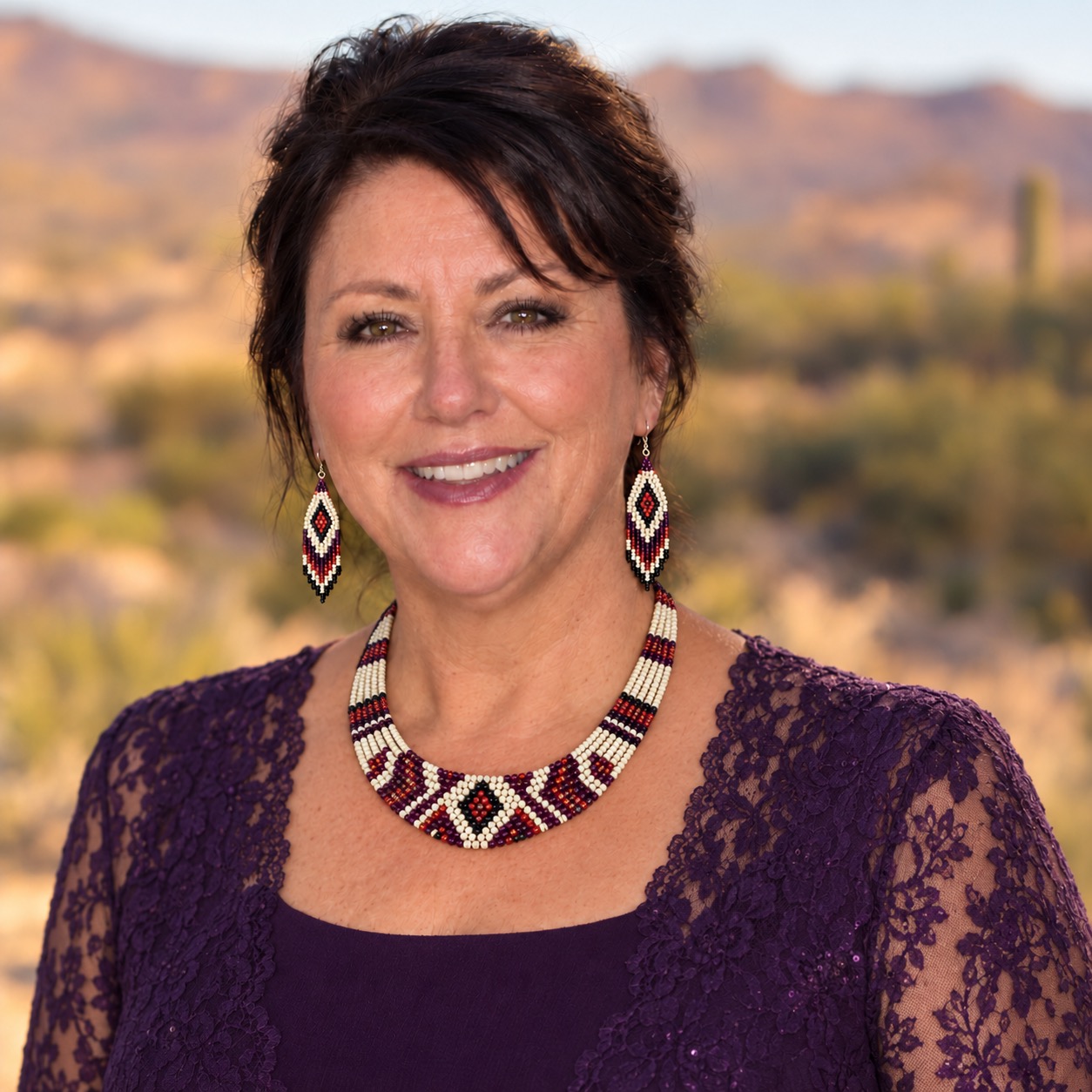
Tanya’s Perspective
Opportunities to Grow, Together
“Our teens deserve sustained opportunities to explore who they are becoming with people who respect them, understand their community, and can help them act on what they discover.”
Tanya McElfresh
Member of the Choctaw Nation of Oklahoma
and the Chickasaw Nation
Educational Advisor, The Lighthouse Academy
More from Tanya’s Perspective
Tanya encourages communities to consider how the seminar can help young people recognize their worth, strengthen belonging, develop their voice, practice supportive relationships, and make the future more approachable.
She emphasizes that young people, families, and trusted tribal leaders will shape delivery, and that communities can evaluate usefulness on their own terms.
“Its promise becomes meaningful when the conversations lead to stronger relationships, accessible support, and actions our young people choose for themselves.”
Bringing the seminar home
A Resource Your Community Can Shape
Program Materials
- Native America Rising participant workbook
- The Creation Code: Teen Edition audiobook
- Companion Facilitator Manual
- Guided conversation and practical application activities
Begin with Your Priorities
Start a conversation about the young people you serve, the people who could guide the experience, and the practical support participants need.
Discuss group size, scheduling, materials, facilitator preparation, and arrangements that fit your setting.
The seminar is an educational resource. Serious health or safety concerns require appropriate professional and community support.
The next chapter begins with a conversation
Bring Native America Rising
to Your Community
For tribal leaders, educators, youth organizations, families, and supporters ready to explore what this could mean where they live.
Presented through The Lighthouse Academy and
The Lighthouse for Humanity Foundation.
Based on The Creation Code: Teen Edition
by John McNeil, The Pacific Institute Community.